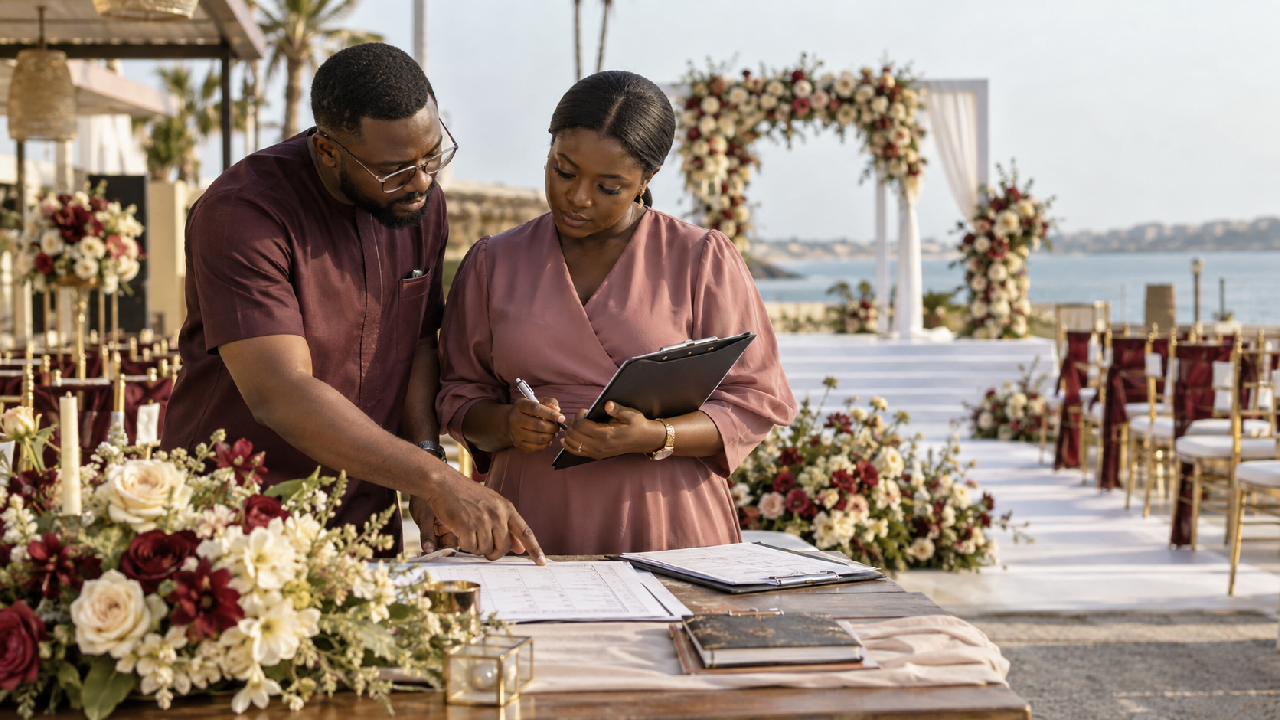
Planning a wedding can feel like ten different jobs happening at once. The easiest way to make it manageable is to decide what matters most, put every task in one shared plan and confirm the important details in writing.
This checklist is designed for weddings in Ghana, including celebrations that combine customary rites, a church or civil ceremony and a reception. You may not need every step. Use the parts that fit your wedding and family arrangements.
The short answer: what should you organise first?
Start with five decisions: the kind of wedding you want, a working guest count, the people making decisions, a realistic budget and a few possible dates. Those choices affect almost everything else, especially the venue, catering, rentals and the professionals who are available.
Do not wait for every small detail before making progress. A sensible working plan is enough to begin asking useful questions.
1. Agree on the wedding and who makes decisions
Talk through the celebrations you are actually organising. Is there a customary engagement, civil registration, church ceremony, reception or a combination? Will everything happen on one day or over several dates?
Agree on who has final approval over spending and who will communicate with each family. This prevents a supplier receiving three different instructions from three well-meaning relatives.
Keep a short written brief with:
- the event dates you are considering;
- the type of ceremony and reception;
- the towns or neighbourhoods that work for both families;
- an early guest estimate;
- your three biggest priorities; and
- anything you definitely do not want.
2. Build one guest list, not several competing lists
The guest count affects the room size, meals, drinks, chairs, tables, stationery and transport. Create one master list and give each family group a deadline for making changes.
Separate confirmed guests from possible guests. Also record children, plus-ones and people who may attend only one part of the celebration. This gives your caterer and venue a much clearer figure than a rounded guess.
3. Create a working budget in Ghana cedis
List the major categories before discussing individual decorations or outfits. Common categories include venue, food and drinks, photography and video, decor, clothing, beauty, entertainment, rentals, transport, accommodation, stationery and contingency.
Use our guide to creating an event budget in Ghana to separate estimates, confirmed quotes, deposits and balances. The point is not to predict every pesewa on day one. It is to see what is already committed and what you can still change.
4. Choose dates and understand the legal arrangements
Before paying a non-refundable deposit, check important family, church and venue dates. If you are registering a marriage, confirm the requirements with the appropriate assembly or registry rather than relying on a social media post.
For couples handling registration in Accra, the Accra Metropolitan Assembly marriage registration guidance explains its current process and document requirements. Procedures can differ by marriage type and authority, so contact the relevant registry directly for your case.
5. Compare venues using your real event plan
A beautiful room is not automatically the right room. Visit with your proposed guest count, seating style, catering plan and programme in mind. Ask about setup hours, closing time, parking, washrooms, power, water, security, sound limits and the wet-weather plan.
Our questions to ask before booking an event venue will help you inspect the practical details. You can also compare event venues on EventsKonnectGH.
6. Book the professionals who shape the day
Once your date and location are reasonably firm, compare the people whose availability or work affects other decisions. Depending on your wedding, that may include a planner, photographer, caterer, decorator, MC, DJ, makeup artist and rental provider.
Tell every provider the same essentials: date, location, guest count, service needed and expected working hours. Then compare the scope, not only the final total. A lower quote may exclude transport, setup, assistants or equipment that another quote includes.
Before paying, read how to find reliable event vendors in Ghana. If photography is on your list, use these questions to ask a photographer before booking. Keep each written quote, receipt and agreed change in one folder.
7. Turn ideas into a clear wedding-day programme
Your programme should show more than ceremony start time. Include provider access, setup, family arrival, couple preparation, photography, ceremony, meal service, speeches, entertainment and closing time.
Build in breathing room. Moving between locations, greeting relatives and gathering people for photographs often takes longer than expected. Share the final programme with the venue and every provider whose work depends on timing.
| When | Useful checks |
|---|---|
| Early planning | Wedding format, decision-makers, guest estimate, budget and possible dates |
| After the date is chosen | Venue, priority providers, contracts and deposit schedule |
| One to two months before | Guest confirmations, programme, fittings, menus, transport and provider coordination |
| Final week | Arrival times, balances, contacts, weather plan and items to bring |
| Event day | One trusted coordinator handles provider questions and timing |
8. Confirm food, rentals and the physical setup
Give the caterer a realistic guest number and agree when the final count is due. Confirm the menu, service style, staffing, tables, linen, serving equipment, water and cleanup. Our caterer deposit checklist covers the questions worth asking.
For rentals and decor, use a written item list with quantities, colours, delivery time, collection time and responsibility for damaged items. Ask the venue which items it already provides before paying twice for the same thing.
9. Make a final confirmation sheet
In the last week, create one page with each provider's name, phone number, arrival time, remaining balance and main responsibility. Add the venue contact, family coordinators and the person authorised to approve last-minute changes.
Confirm everything directly. “They know” is not a useful final check. A short written message stating the date, place, arrival time and agreed service can prevent avoidable confusion.
Frequently asked questions
How early should we start planning?
Start as soon as you know the type of celebration you want and have a workable budget. Popular venues and providers can have limited availability, but there is no single deadline that suits every wedding. A smaller wedding with fewer suppliers may need less lead time than a multi-day celebration.
Who should speak to vendors on the wedding day?
Choose one trusted person who knows the plan and can make routine decisions. Give providers that contact before the event. The couple should not have to answer setup questions while getting ready.
What should we keep after making a payment?
Keep the written quote or contract, proof of payment, receipt and any message that changes the original agreement. Record the remaining balance and due date immediately.